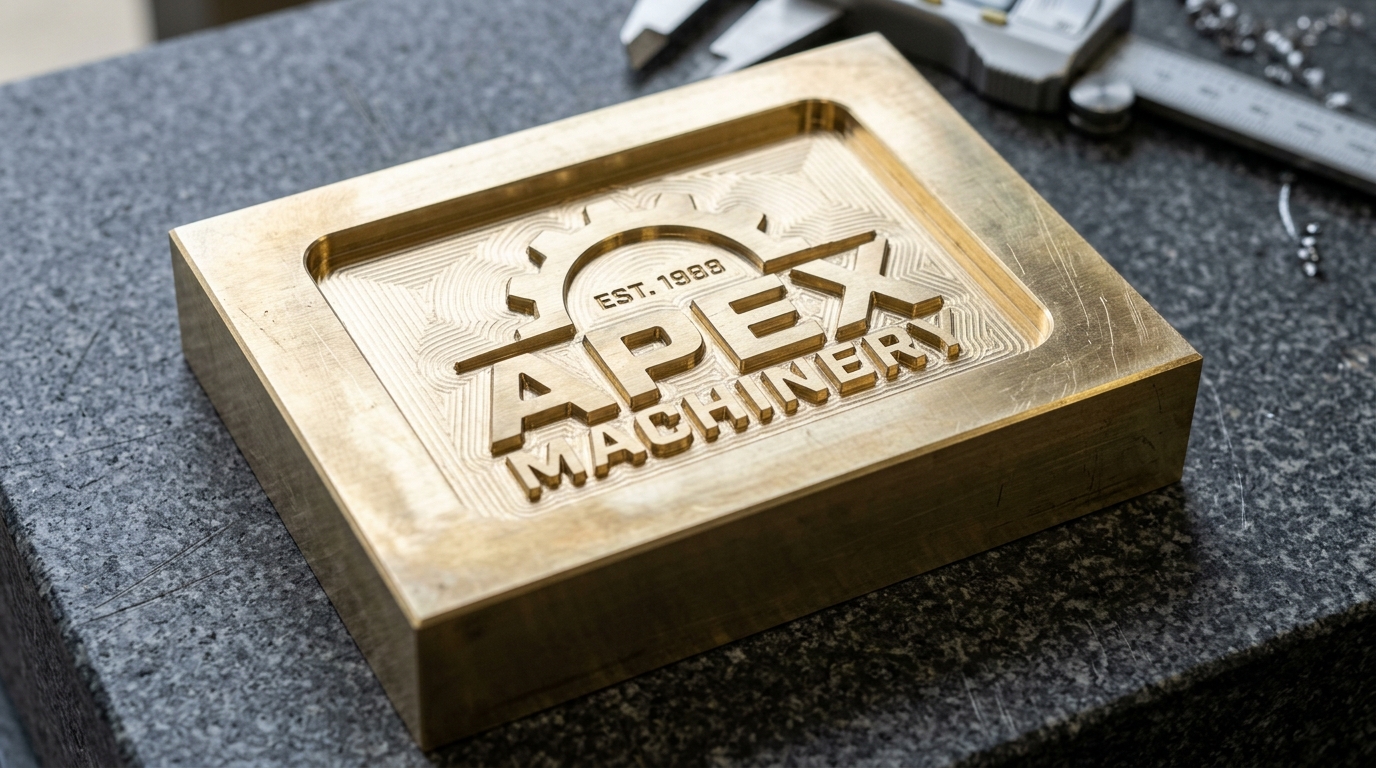
From athletic jerseys and tactical uniforms to motorcycle gloves and footwear, dimensional rubber logos and silicone badges have largely superseded flat embroidery. What consumers perceive as a vibrant, flexible silicone emblem begins life as an engineered, mirror-recessed solid brass die produced in a CNC machine shop.
Why Solid Brass Is the Gold Standard Material
While aluminum is occasionally used for lower-volume pilot molds, free-cutting leaded brass (such as CuZn39Pb3 / C36000) is universally favored for professional rubber die production due to three critical engineering factors:
- Exceptional Machinability with Micro-Tools: Brass produces crisp, segmented chips that do not weld or smear around micro-endmills. When running cutters with diameters as small as 0.3mm (0.012"), tool breakage is minimized and wall fidelity is pristine.
- High Thermal Conductivity: Brass transfers heat evenly and rapidly during the vulcanizing or thermo-curing press cycle. This prevents hot spots, ensuring uniform polymer cure times and bubble-free rubber edges.
- Natural Lubricity & Clean Release: Mold release agents coat brass smoothly, preventing vulcanized rubber or soft PVC formulations from sticking in micro-recessed crevices.
Reverse-Relief Geometry & Multi-Depth Color Segmentation
A rubber logo die is machined in the negative (reverse mirror image). Features that stand out prominently on the finished badge are milled as deep cavities into the brass block.
When creating multi-color PVC patches, the die must include microscopic containment ridges (color dams) between adjacent color fields. These dams are typically 0.2mm to 0.4mm wide and prevent liquid plastisol inks from bleeding into neighboring segments during micro-dispensing.
Critical Draft Angles for Clean Demolding
Unlike steel stamping dies where straight 90° walls are standard, rubber dies require draft angles—typically between 5° and 15°—on every recessed cavity wall. Tapered micro-endmills machine these relief angles, allowing the flexible cured badge to peel out effortlessly without tearing delicate letters or fine graphic lines.
Need Custom Brass Dies for Rubber or Silicone Badges?
CrownMark CNC Works manufactures custom brass master dies for rubber logo manufacturers, sportswear factories, and patch makers across Sialkot and international markets.